CAR:Estify:PRESS
Canadian automotive market data, buyer guides, and EV context—curated in one place.
| Image | Title | Author | Categories | Tags |
|---|---|---|---|---|
 | Canadian Car Buyers Are Pricing Vehicles Before They Reach the Dealership — But Is Their Number Right? Canadian buyers increasingly decide what a used vehicle should cost before they ever speak to a dealership. CARFAX Canada research found that 52% of buyers used comparable listings when determining what they planned to pay. 18% reported using AI to help estimate vehicle value, showing how quickly AI is becoming part of automotive research. More information does not automatically produce an accurate valuation. Trim, kilometres, condition, accident history and local demand still matter. The best approach is not to trust one number. Build a range using comparable listings, vehicle-specific data and a structured valuation method. | Noah Minami | News & market | |
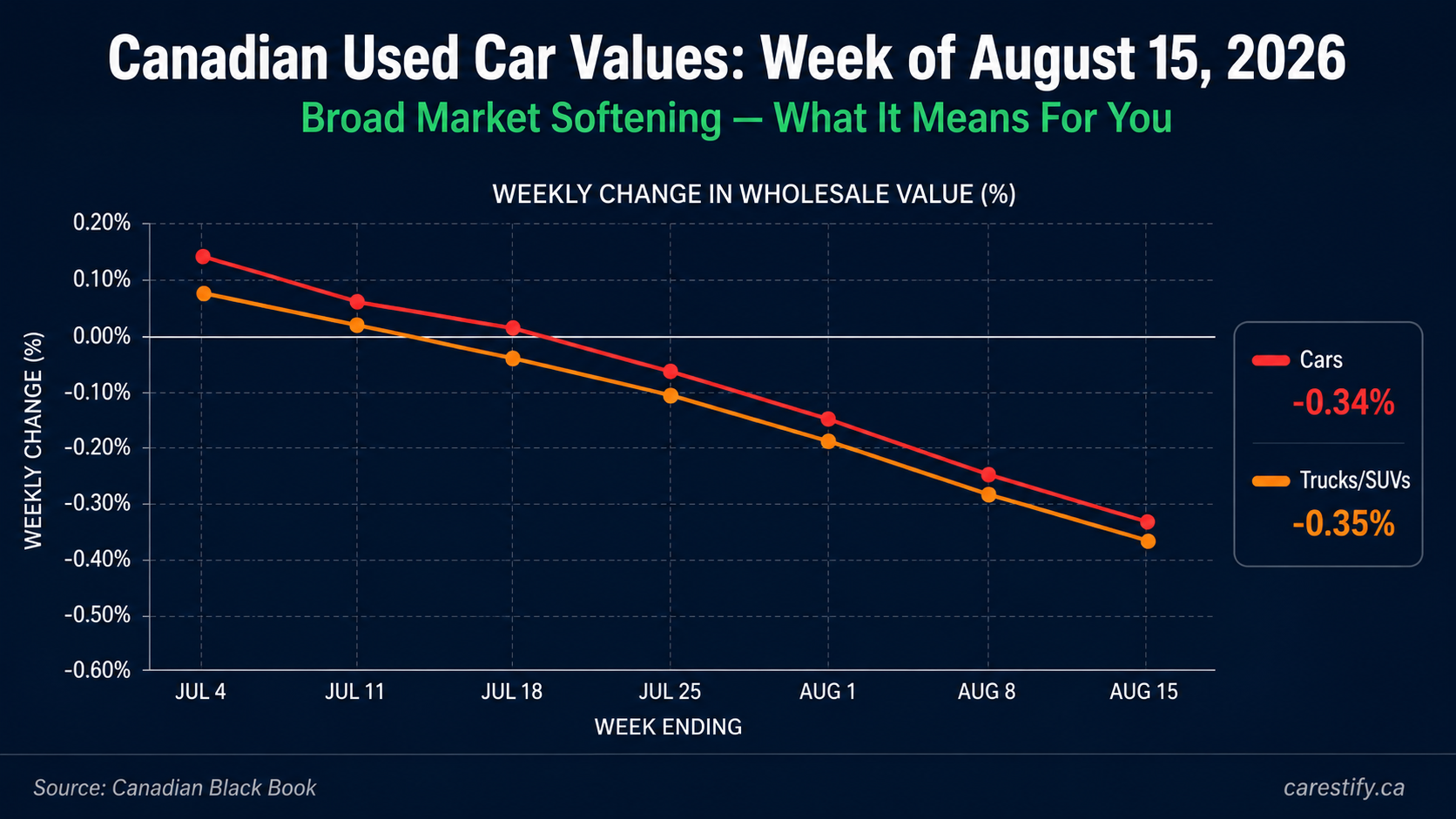 | Canadian Used-Car Prices Are Softening: What the August 2026 Wholesale Market Means for Buyers and Sellers Canadian Black Book reported that overall used-vehicle wholesale values declined 0.34% during the week ending August 15, 2026. Cars fell 0.34% and Trucks/SUVs fell 0.35%, meaning the softness was broad rather than isolated to one vehicle type. The decline was steeper than the 2017–2019 same-week average, but it does not mean every Canadian vehicle suddenly lost 0.34% of its value. Clean, desirable vehicles remain more resilient than average-condition inventory, which is important when estimating a real trade-in or private-sale price. Retail asking prices tend to react more slowly than wholesale values, so sellers should not use dealership advertisements alone to estimate what their own vehicle is worth today. | Noah Minami | News & market | |
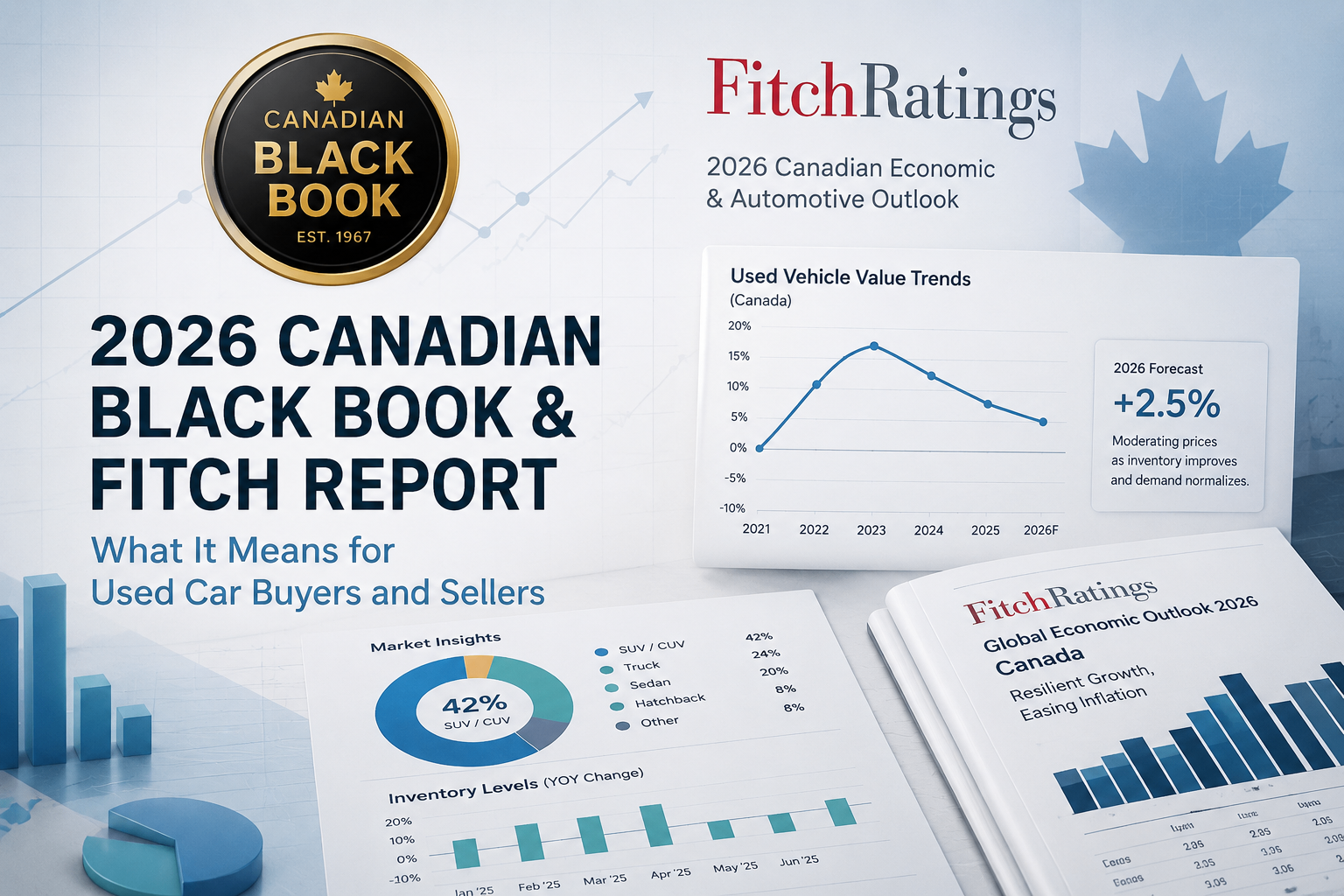 | What the 2026 Canadian Black Book & Fitch Report Means for Used Car Buyers and Sellers Canadian Black Book and Fitch Ratings have released their 2026 Vehicle Depreciation Report — the most authoritative annual assessment of used vehicle value trends in Canada. The headline numbers are significant: passenger cars are depreciating at up to -16% in 2026, while light trucks are holding comparatively better at under -10%. The wholesale retention index has fallen to its lowest level since August 2021. 4-year retained value is forecast 10.2% below 2025 levels. Canada entered a technical recession in Q1 2026. For used car owners in Canada, the direction of travel is clear — and the window to sell at peak value is closing faster than most sellers realize. | Noah Minami | News & market | |
 | Why the Toyota Camry and Honda Accord Are Losing Ground in Canada's Used Car Market The Toyota Camry and Honda Accord — two of the most dependable mid-size sedans ever sold in Canada — are experiencing meaningful used market softening in 2026. A used Toyota Camry or Honda Accord that might have been $28,000 in 2022 is more likely to be $21,000–$24,000 in 2026 depending on mileage and year. The core reason is a buyer migration: the customers who historically purchased mid-size sedans are now choosing compact SUVs — primarily the Honda CR-V and Toyota RAV4 — instead. The used Camry and Accord still represent excellent value. But if you own one and are planning to sell, the market you are selling into looks different from two years ago. | Noah Minami | News & market | |
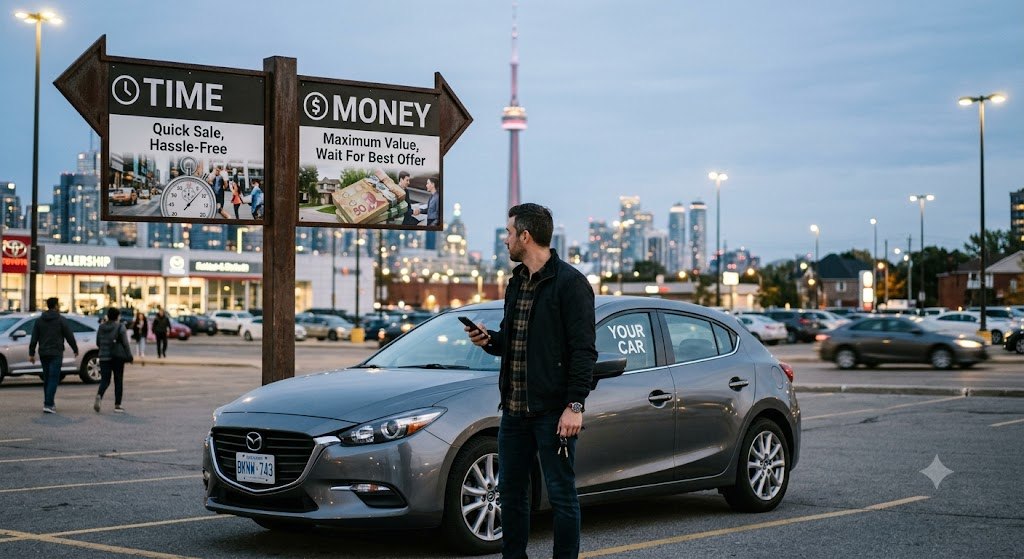 | Selling Your Car in Canada: Time or Money? The Question Nobody Asks Before Listing Private sellers in Canada typically net $2,000–$3,000 more than a dealer offer — but only when the vehicle is priced correctly and the sale completes within a reasonable timeframe. The hidden variable most sellers never calculate is their own time. One to two months of showings, no-shows, inquiries, and negotiation at BC minimum wage represents $2,000–$3,000 in labour cost — which erases the premium entirely. Before you list privately, answer one question honestly: do you have the time, or do you need the money? | Noah Minami | News & market | |
| Image | Title | Author | Categories | Tags |