The Science of Valuation
How CAR:estify's AI Engine Redefines Market Accuracy
Why static book values fail in Canada—and how live listings, regional economics, depreciation DNA, and a 72-hour freshness protocol sharpen every CAR:estify estimate.
Introduction: The Data Gap in the Canadian Automotive Market

For decades, Canadian car owners had to rely on static, outdated "book values" that didn't reflect the rapid fluctuations of the local market. A sudden shift in gas prices, a change in interest rates, or a regional shortage of SUVs in British Columbia could render yesterday's price irrelevant today.
CAR:estify was built to bridge this gap. We don't just provide a price; we provide a real-time market snapshot. By synthesizing millions of data points, our platform offers a level of transparency previously reserved only for licensed dealerships.
1. The Multi-Dimensional Data Ecosystem
Our valuation engine is not a simple calculator. It is a sophisticated neural network that pulls from four distinct "data pillars":
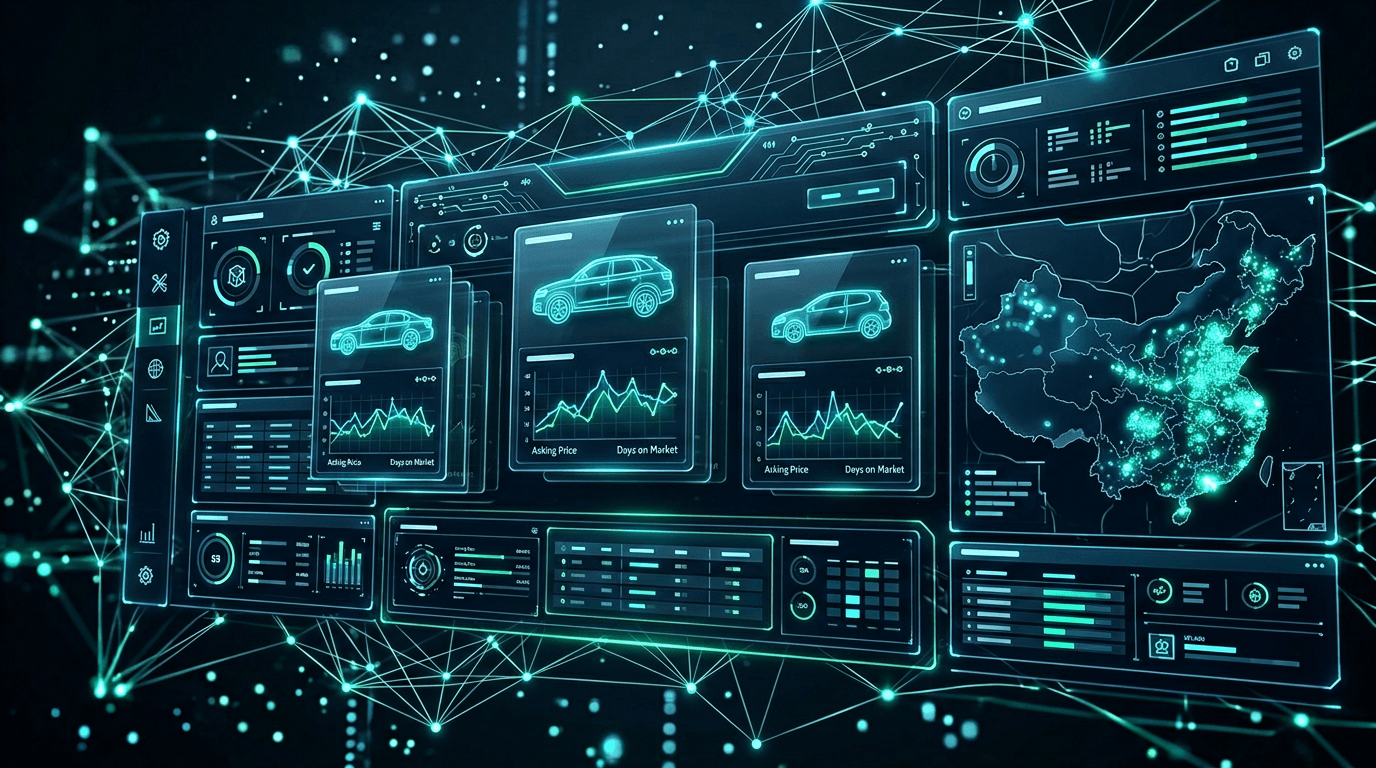
A. Aggregated Live Market Listings
We continuously crawl thousands of active dealer and private listings across all Canadian provinces. This allows us to see the Asking Price vs. Time on Market. If a car has been sitting for 60 days, our AI knows that the price is likely inflated and adjusts the valuation downward for realism.
B. Regional Economic Variables
The "Geo-Value" factor is critical. Using metadata, CAR:estify understands that a Subaru WRX STI holds a premium in the snowy terrains of British Columbia and Quebec, whereas a luxury convertible might see higher demand in Southern Ontario during the summer months.
C. Historical Depreciation Intelligence
Every vehicle has a unique "Depreciation DNA." Some luxury European brands can drop sharply in value soon after leaving the lot, while certain Japanese performance cars (like the WRX or Tacoma) often follow a slower depreciation curve. Our AI predicts future value based on these historical patterns.
D. The Macro-Economic Overlay
We factor in broader economic indicators, including:
- Fuel price trends: affecting the demand for high-displacement V8 engines vs. EVs.
- Inventory levels: new car production delays directly impact the value of your used vehicle.
2. Technical Deep Dive: The "3-Day Refresh" Algorithm
One of CAR:estify's most advanced features is our Data Freshness Protocol. In a volatile market, data older than a week is essentially "legacy data."

The 72-Hour TTL (Time-To-Live)
Every price stored in our database (Firestore) is timestamped. If a user requests a valuation for a model that hasn't been updated in 3 days, our system automatically bypasses the cache.
Real-time API Synthesis
The engine triggers a new request to our advanced AI models (Gemini-class) to scrape and analyze the current hour's market sentiment.
Self-Correction Logic
If a previous valuation was an "outlier" (too high or too low), the new 3-day refresh cycle corrects the trend line, ensuring the error doesn't persist.
3. Understanding the "Three-Tier" Valuation Model
We believe that one number is misleading. A car has different values depending on the context of the transaction.
Tier 1: Professional Dealer Retail (The Top End)
This is the price you see on a dealership lot. It includes the "Dealer Markup," reconditioning costs, and certification warranties.
Use case: selling privately and justifying a premium vs. lot-ready presentation.
Tier 2: Fair Market Private Sale (The Sweet Spot)
This represents the peer-to-peer transaction value. It removes the dealership overhead while maintaining a fair return for the seller.
Use case: realistic expectation for a quick, fair sale on Facebook Marketplace or Kijiji.
Tier 3: Instant Cash / Trade-In (The Wholesale Floor)
This is the "liquidity price." It's what a dealer would pay to take the car off your hands immediately without you having to clean, market, or show the vehicle to strangers.
Use case: negotiating your next purchase at a dealership.
4. How to Maximize the Accuracy of Your Estimate
To get the most out of CAR:estify, users must understand the "Condition Multiplier." Our AI assumes a "Good" condition as a baseline, but the following factors can meaningfully swing the value—sometimes by a noticeable share of the estimate:
- Service records: a car with a digital service history at an authorized dealer is worth significantly more than one with "DIY" maintenance.
- Accident history (Carfax factors): even a minor "glass claim" can affect the algorithm's trust score for that specific VIN.
- Trim-specific demand: our system identifies high-value packages (e.g., "M-Sport" for BMW or "TRD Pro" for Toyota) that generic calculators often miss.
5. The CAR:estify Commitment to Transparency
Our goal is to eliminate "Price Anxiety." Whether you are a professional dealer (like our founders) or a student buying your first car, you deserve access to the same data. By using CAR:estify, you are not just getting a number—you are getting a competitive edge.
Final note: while our AI is world-class, we always recommend a physical inspection by a certified mechanic for a final safety and condition assessment. CAR:estify provides the market truth; the mechanic provides the mechanical truth.
Conclusion
CAR:estify is more than a website; it is an evolving ecosystem designed to bring fairness to the Canadian automotive trade. As we continue to refine our 3-day refresh logic and expand our data sources, our accuracy will only continue to sharpen.
Empower your next car deal with CAR:estify.