Professional resale
The Definitive Masterclass on Strategic Vehicle Asset Management: Maximizing Resale Value in the Canadian Market
The economic reality of automotive assets—and the "Be Professional" playbook
Four pillars—documentation, sensory prep, mechanical stewardship, and data-backed negotiation—designed for salt-belt wear, Ontario highway miles, and BC mountain duty cycles.
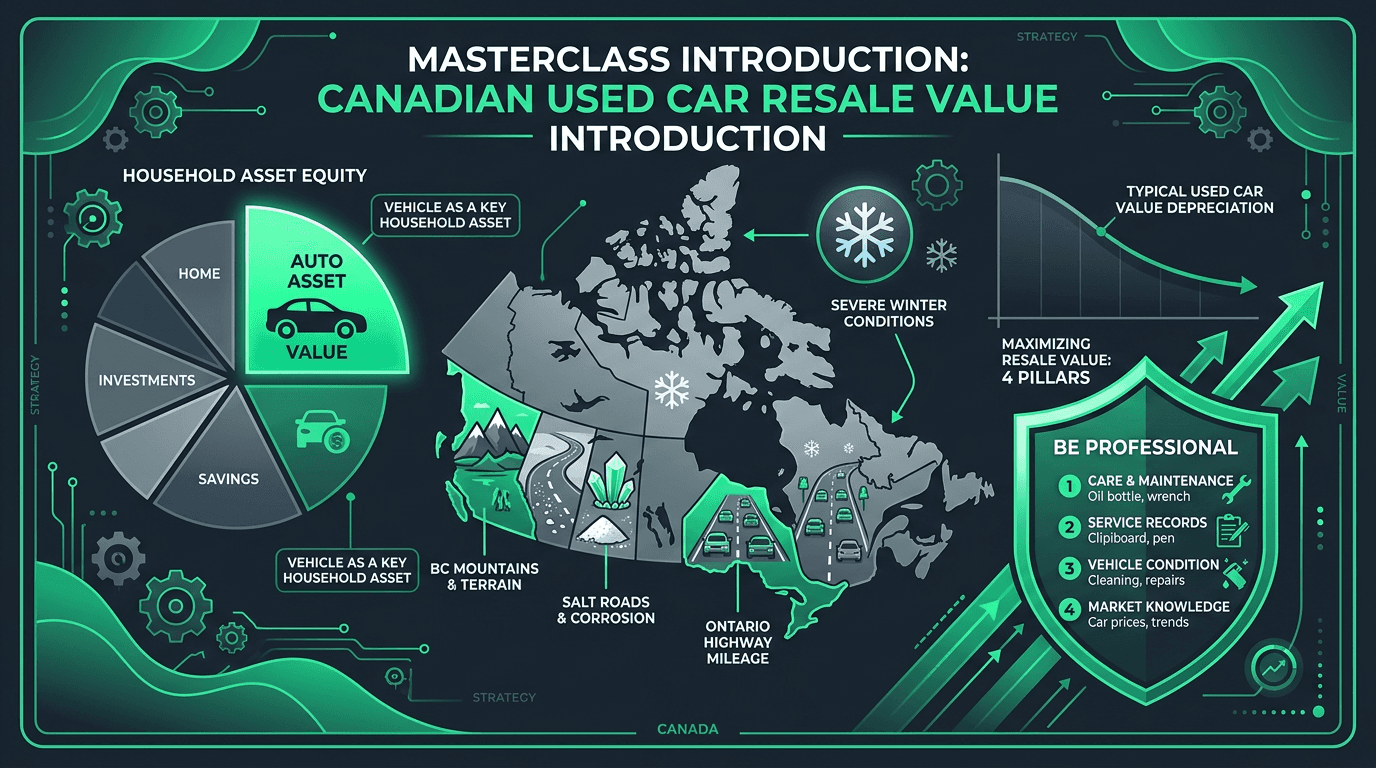
Introduction: The Economic Reality of Automotive Assets in Canada
In the current Canadian economic climate—characterized by fluctuating interest rates and a volatile supply chain—a vehicle has transitioned from a simple depreciating utility to a significant portion of a household's net worth. From the salt-slicked roads of the Maritimes to the high-mileage highway corridors of Ontario and the demanding mountainous terrain of British Columbia, a car's "Value Lifecycle" is under constant threat.
Many sellers leave money on the table during a vehicle transaction simply due to a lack of professional presentation and data-backed negotiation. To combat this, one must adopt the "Be Professional" strategy. This is not merely a set of cleaning tips; it is a rigorous, four-pillar framework designed to preserve capital and support a stronger outcome on your automotive asset.
Pillar 1: The Integrity of Documentation (The "Paperwork Fortress")
In a high-stakes private sale, the biggest hurdle is the "Trust Deficit." In a market saturated with "curbers" and "lemon" vehicles, a professional service portfolio acts as a "Paperwork Fortress" that defends your asking price against any scrutiny.
1.1 The Chronological Service Portfolio: Costs and Implementation
Investing in documentation is the most cost-effective way to protect your car's value. A high-quality physical binder and organized tab dividers will typically cost you between $20 and $30 CAD at a local Staples or through Amazon. While the monetary cost is negligible, the perceived value it creates is immense. When you include a Carfax Report (approximately $43.95 + tax) and a CAR:estify Valuation Report (which is a free part of our service ecosystem), you are spending less than $80 total.
The Return: This "Trust Package" does not guarantee a fixed dollar uplift, but it can support stronger negotiations by reducing the buyer's "uncertainty discount" and making it easier to hold a well-supported asking price versus a seller with no records.
Recall Compliance: Professionalism means being proactive. Use your VIN to check for outstanding recalls via the Transport Canada database. Providing a printed "Recall Clearance Report" ($0 cost) proves that your vehicle is legally compliant and safe for the road.
Pillar 2: Sensory Detailing and Aesthetic Restoration
A buyer makes a psychological decision within the first 20 seconds of seeing a vehicle. This is known in psychology as "Thin-Slicing." If the car "feels" new, the buyer's brain begins looking for reasons to buy, rather than reasons to negotiate the price down.
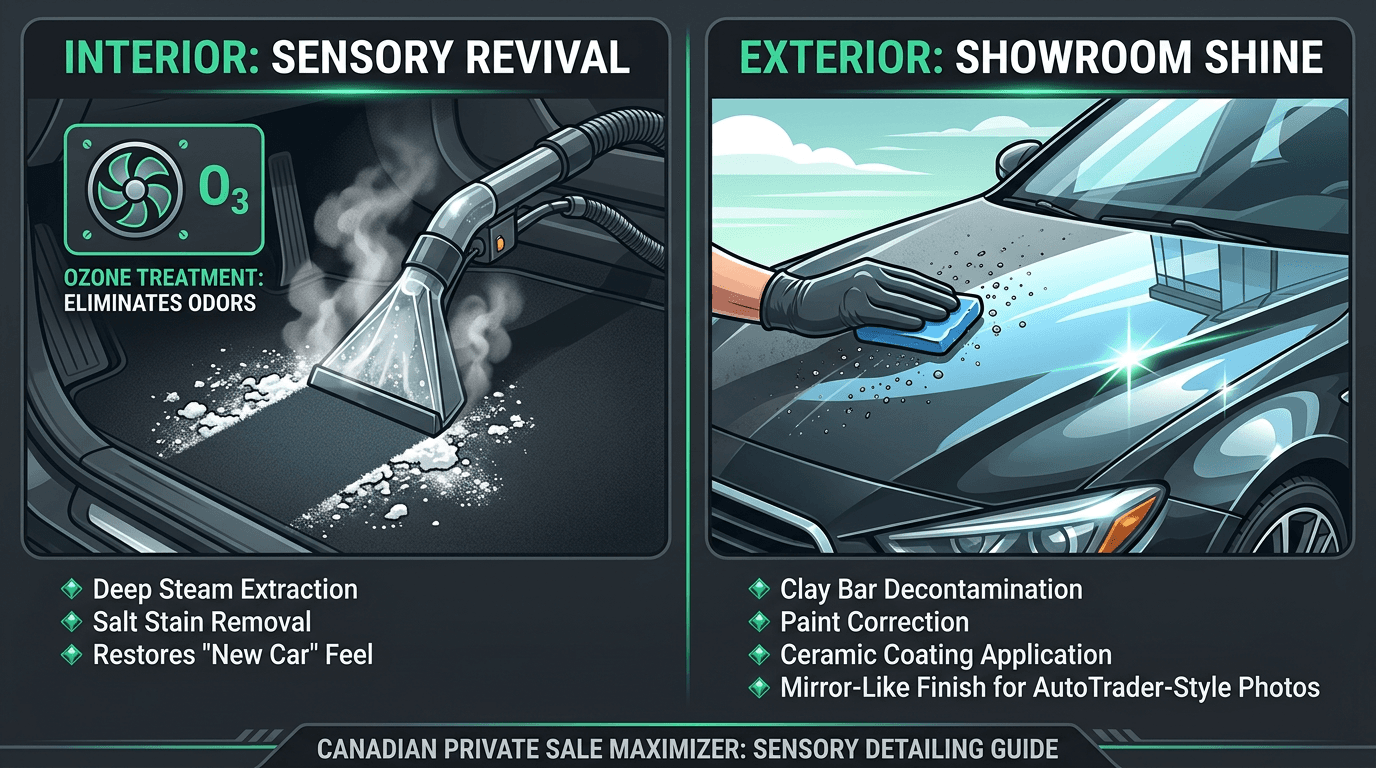
2.1 Interior Decontamination (The "New Car" Reset)
Investment Costs: For a DIY approach, a high-quality interior cleaning kit and a clay bar set can be purchased for roughly $70 to $120. If you hire a professional detailer in BC or Ontario, the service typically ranges from $250 to $450 for a full interior and exterior "reset."
Salt Extraction: In Canada, white salt crust on the carpets is a "Value Killer." Using a specialized acetic acid solution (about $15) followed by a hot-water extraction is mandatory.
Odor Neutralization: Never use heavy perfumes. An ozone generator treatment ($50–$80 at a shop) or an enzyme-based odor eater ($20) removes the source of smells, creating a neutral canvas that suggests a "like-new" condition.
2.2 Exterior Preservation and Curb Appeal
The Paint Reset: A professional three-step process (iron decontamination, clay bar, and ceramic sealant) might cost $150 in materials for a DIYer, but it creates a "depth of gloss" that makes your Facebook Marketplace or AutoTrader photos stand out. A car that looks and smells like a "Certified Pre-Owned" unit tends to draw stronger interest and fewer cosmetic deductions than a vehicle with stained carpets and dull paint—without a universal premium attached.
Pillar 3: Proactive Mechanical Stewardship (The "Zero-Defect" Policy)
In many Canadian provinces, a "Safety Inspection" is a mandatory part of the transfer process. A professional seller eliminates the buyer's fear of "hidden costs" by ensuring the vehicle is turn-key ready.
3.1 Consumables as a Negotiation Shield
The most significant "Value Leakage" happens when a buyer discovers a mechanical flaw.
Brake Strategy: If your brakes have limited life remaining, spending $300 to $450 on a fresh brake service at a reputable local shop is a defensive investment. A buyer who sees "Needs Brakes" will often try to deduct more than the work actually costs. Addressing consumables yourself can remove that talking point and support a firmer negotiation—without promising a fixed dollar return.
Battery Health: In the Canadian cold, a weak battery is a liability. Spending $180 to $220 on a new AGM battery with a 3-year warranty is a fantastic "closing tool" during a negotiation.
3.2 Under-the-Hood Transparency
A clean engine bay allows a buyer to verify that there are no active oil or coolant leaks. A simple engine bay detail ($50–$100 at a shop, or $15 for degreaser DIY) builds massive trust and signals that the car's "circulatory system" has been maintained to professional standards.
Pillar 4: The Financial Logic of Professional Prep
Understanding the "Be Professional" strategy requires viewing these actions as strategic preparation rather than guaranteed-return expenses.
4.1 Framing Prep Spend as Negotiation Support
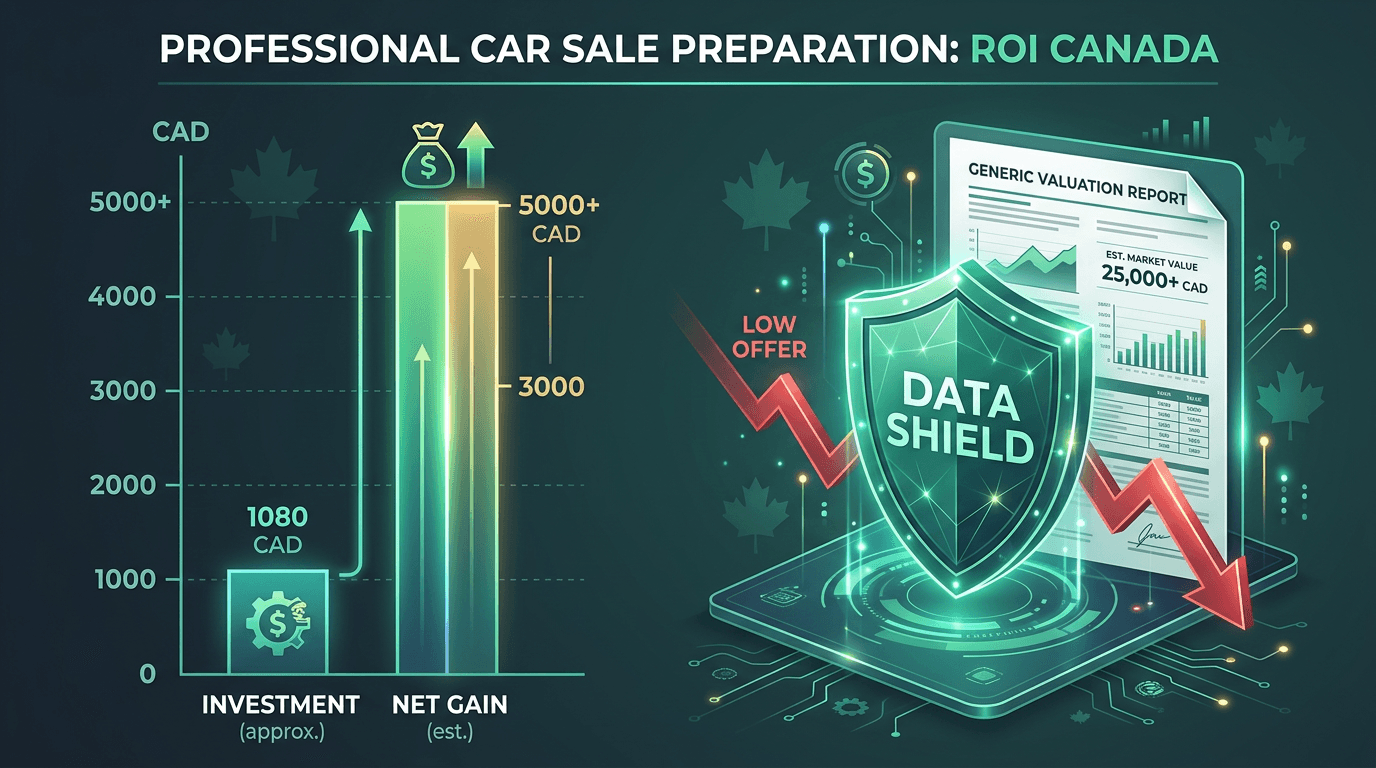
When you add up a "Premium Professional" approach—a full detail, minor mechanical refreshes, and a complete documentation package—your outlay is often in the low four figures. Treat that spend as preparation capital, not a guaranteed ROI formula.
What prep can support: Documentation, detailing, and fresh consumables can help you attract more serious buyers, reduce line-item deductions, and hold a better-supported asking price versus an unprepared listing. Outcomes vary by vehicle, market, and buyer—there is no fixed percentage uplift.
Practical takeaway: Focus on visible condition, proof of care, and data-backed pricing. Those levers strengthen negotiation leverage even when the exact dollar return cannot be promised in advance.
Pillar 5: Psychological Negotiation and Market Positioning
5.1 The CAR:estify Data Advantage
Never enter a negotiation based on emotion. Bring a printed CAR:estify Professional Valuation Report.
The Data Shield: When a buyer tries to low-ball you, point to the report and explain that your price is grounded in real-time market data for your province, your specific trim, and the documented professional maintenance you invested in. This level of organization intimidates low-ball tactics and attracts serious, high-value buyers.
5.2 Legal and Administrative Smoothness
In provinces like British Columbia (ICBC) or Ontario (MTO), the paperwork can be daunting.
The "Guide" Factor: Have the Transfer of Ownership forms (e.g., APV9T in BC) already printed. Knowing the rules regarding the Provincial Sales Tax (PST) and having your vehicle's history ready for the buyer's insurance agent reduces friction and closes the deal faster, preventing "buyer's remorse" during a delayed closing.
Conclusion: The Professional Dividend
Selling a car professionally in Canada takes roughly 12 to 15 hours of preparation, but the dividend is undeniable. You aren't just selling a car; you are transacting a high-value, well-managed asset. By providing all records and a CAR:estify report, you protect yourself from post-sale disputes and ensure that both parties walk away satisfied.