Private sale playbook
The Ultimate Guide to Selling Your Car
The Ultimate Guide to Selling Your Car in Canada: From Paperwork to Ownership Transfer
BC Autoplan, Ontario UVIP, SAAQ digital transfer, Alberta registries—and why plates, insurance timing, and your bill of sale matter as much as price.
Introduction
Selling a vehicle privately in Canada can be a lucrative way to get the best value for your car, but it requires navigating a maze of provincial regulations. From the Pacific coast of BC to the shores of the Maritimes, every province has a unique "Rulebook" for ownership transfer.
This guide provides a comprehensive 5-step roadmap to ensure your sale is legal, safe, and profitable.
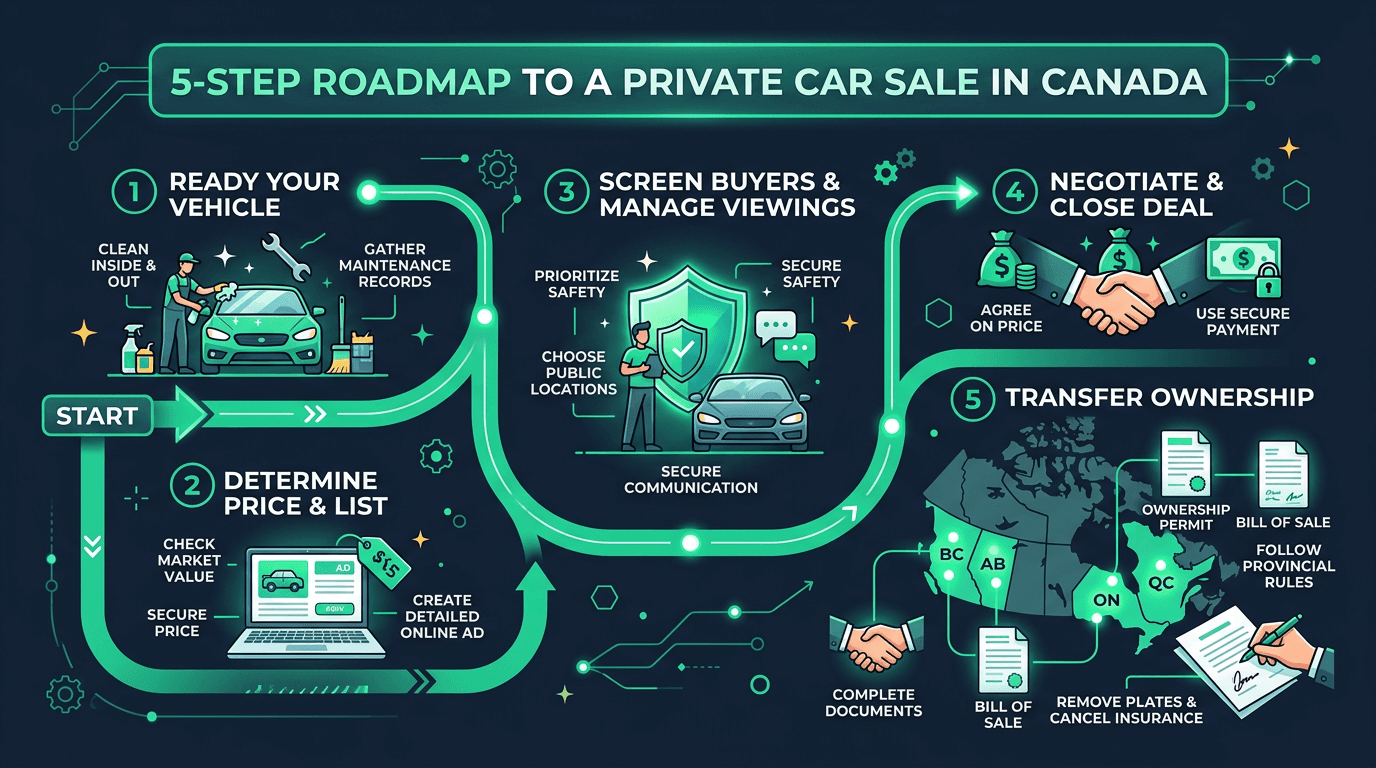
Step 1: Inventory Your Documents (The Essentials)
Before you even wash the car for photos, you must secure these documents. Missing one can stall a sale for weeks.
Vehicle registration (ownership)
The "Permit" or "Owner's certificate." In Canada, this is typically a two-part document. You must keep the "Plate" portion and give the buyer the "Vehicle" portion once signed.
Bill of sale
This is your legal protection. It must include:
- VIN (vehicle identification number)
- Year, make, model, and trim
- Final sale price and date
- Buyer and seller's full legal names, addresses, and signatures.
Province-specific mandates
- Ontario: you must purchase and provide a Used Vehicle Information Package (UVIP). It costs $20 and shows the car's history and any existing liens.
- British Columbia: you need the ICBC transfer/tax form (APV9T).
Step 2: Provincial Transfer Procedures (Where the Rules Differ)
The actual act of "Handing over" the car varies significantly by province. Here is how to handle the big four:
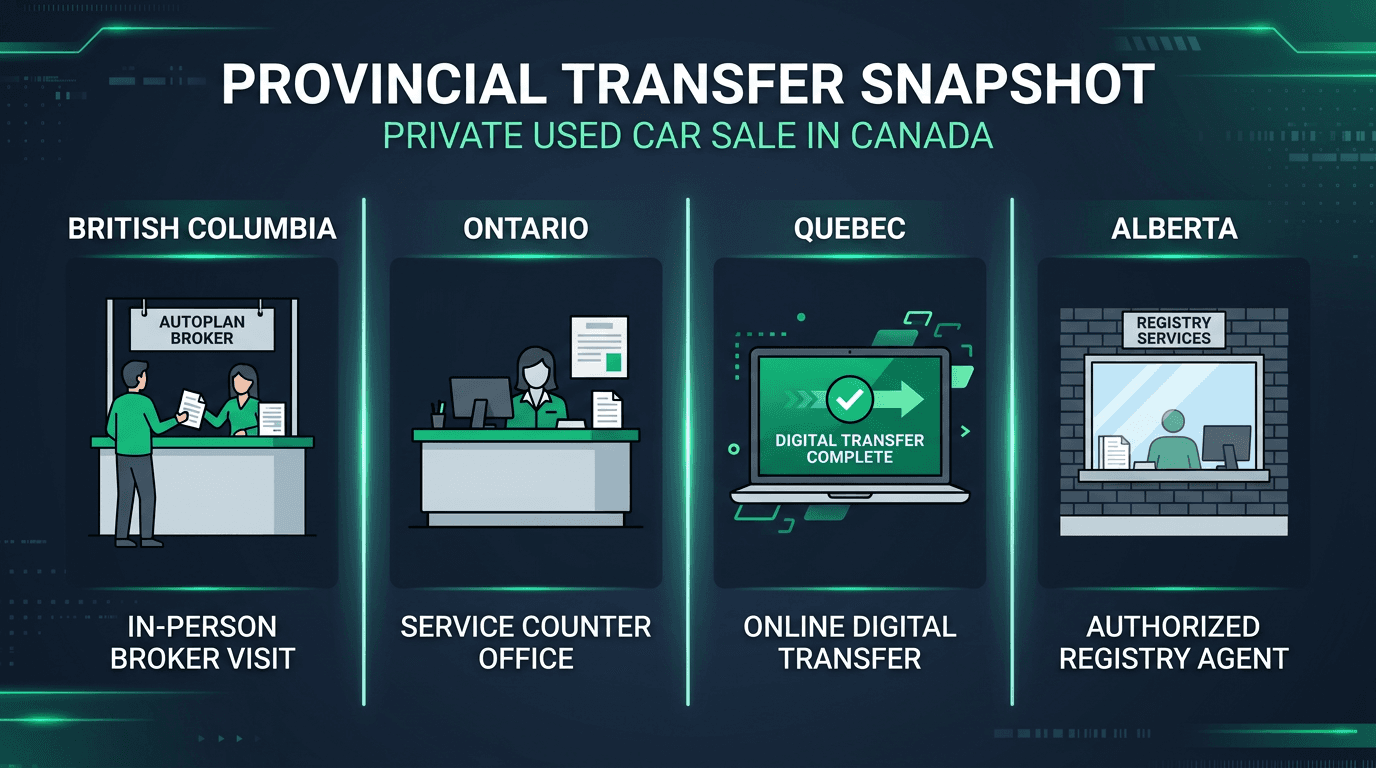
| Province | Transfer method | Key requirement |
|---|---|---|
| BC (ICBC) | In-person at an Autoplan broker. | Both parties should go together so the seller's name is removed from the record immediately. |
| Ontario | ServiceOntario office. | Seller provides the UVIP and signed permit; buyer registers the car within 6 days. |
| Quebec | SAAQclic (online) or SAAQ office. | Digital transfer is now the standard. The seller must not let the buyer leave until the transfer is accepted on SAAQclic. |
| Alberta | Registry agent. | A standard bill of sale is required. The buyer has 14 days to register if they have valid insurance. |
Step 3: The Insurance "Golden Rule"
Insurance is handled differently in public provinces (BC, SK, MB, QC) vs. private provinces (ON, AB, Atlantic). However, one rule applies to everyone:
Never cancel your insurance until you are 100% sure the ownership transfer is complete.
During the test drive
Your insurance covers the car while a potential buyer is driving (assuming they have a valid license).
After the sale
Once the bill of sale is signed and the plates are removed, notify your provider. In BC, you do this through your Autoplan broker. In Ontario/Alberta, you call your private insurer to either cancel or transfer the policy to your new vehicle.
Liability
If you cancel too early and the buyer gets into an accident before registering the car, you could still be legally liable as the "Owner on record."
Step 4: Plate Removal and "As-Is" Declaration
A common mistake in Canada is letting the buyer drive away with your plates. Stop.
1. Plates stay with the seller
In almost every province (including BC and ON), the license plates belong to you, not the car. Remove them immediately. You can often get a refund for the remaining "Sticker" months or transfer them to a new car.
2. The "As-is" clause
Unless you are a licensed dealer offering a warranty, always write "Vehicle sold in 'as-is' condition" on the bill of sale. This protects you if a mechanical issue arises 48 hours after the sale.
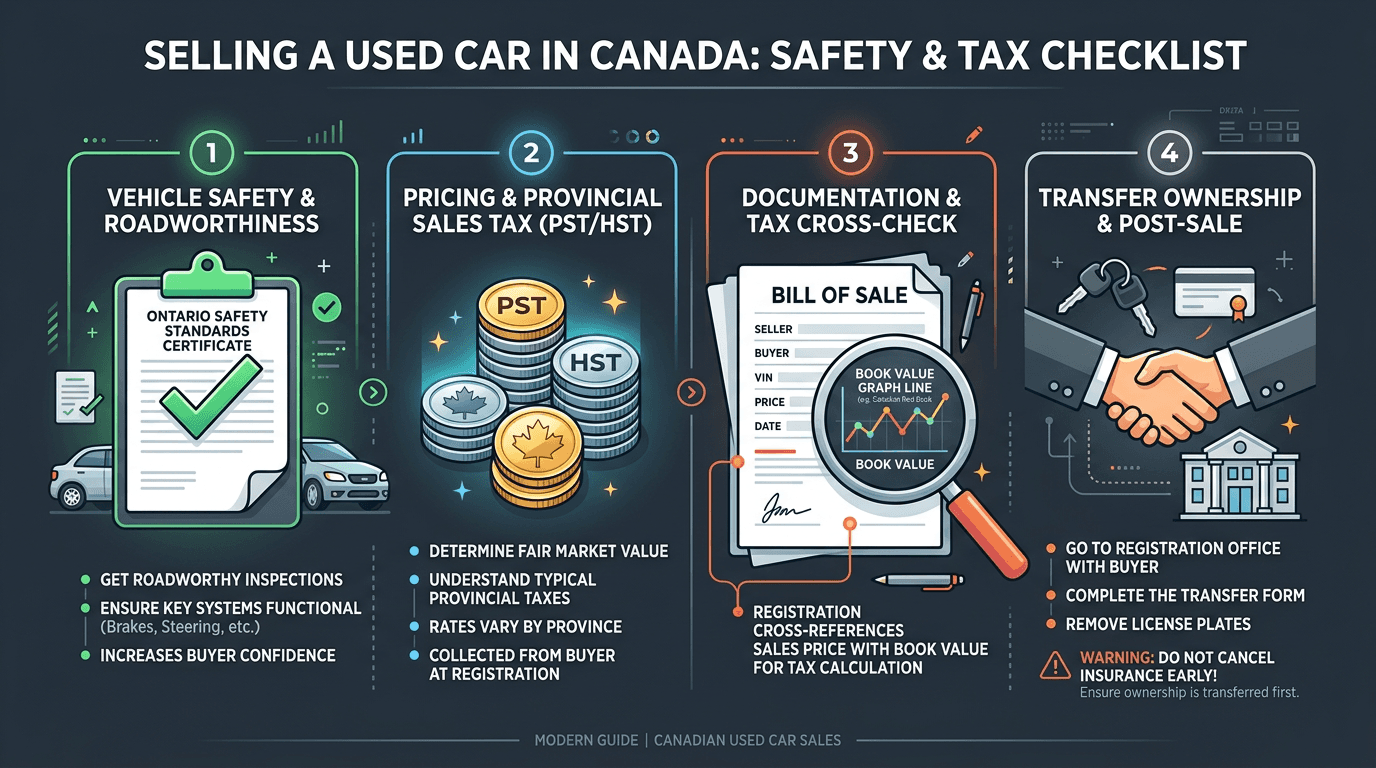
Step 5: Safety Inspections and Taxes
Safety certificates
In Ontario, a buyer cannot put plates on a car without a Safety Standards Certificate (SSC). Sellers usually get this done to make the car more "Marketable." In BC, a safety inspection is generally not required for a private sale unless the car is from out-of-province.
Who pays the tax?
In most private sales, the buyer pays the sales tax (PST/HST) at the registry office when they transfer the vehicle into their name. The price on your bill of sale determines the tax amount (though registries often check against the "Blue book" value to prevent tax evasion).
Summary Checklist for Sellers
- Clean the vehicle and take high-quality photos.
- Run a CAR:estify market report to set a competitive price.
- Download the provincial bill of sale template.
- (ON only) Buy the UVIP.
- (BC only) Get the APV9T form.
- Meet the buyer in a safe, public place.
- Remove plates and personal belongings.
- Complete the transfer at the registry/broker or online.
Conclusion
Selling your car in Canada doesn't have to be stressful. By understanding your province's specific paperwork—like BC's Autoplan process or Ontario's UVIP requirements—you protect your legal rights and your wallet.